I sat down with Alexander Ryker: sales leader, coach, and founder of Transformational Sales, who has built and led multiple 8-figure sales teams across 10 years in high ticket, and helped over 300 reps double their close rate in 8 weeks.
We talked about why objections are your fault, how to sell without ever getting one, and what actually moves the needle from 10K to 20K a month.

Objections Are Feedback.
Not resistance.
Not bad leads.
Not a bad day.
Feedback.
That’s how Ryker defines them.
And it changes everything about how you handle them.
His take: every objection is a sign that something was missed earlier in the call.
“I don’t have the money” doesn’t mean they’re broke.
It means not enough value was communicated for them to justify parting with it.
“Now’s not the right time” doesn’t mean they’re busy.
It means this wasn’t made important enough to be a priority over everything else.
Go down the list.
Every objection traces back to the same root: value wasn’t communicated well enough, early enough.
That’s the whole game.
Handle it upstream, and by the time you drop the price, they say yes.

The Symptom vs. The Root
Ryker makes a distinction most reps miss.
Objections have two layers:
The surface level reason.
And the root cause problem.
“I need to think about it” is not a real objection.
It’s a smoke screen.
And if you try to handle a smoke screen, you’re arguing with something that doesn’t exist.
“I need to think about it is a surface level reason to a root cause problem. Unpack it and you’ll find what’s actually preventing them from saying yes.”
So when it comes up, he goes straight to the source:
“I hear that… what’s coming up for you right now? What’s actually preventing you from saying yes?”
Then you find the real thing.
Money. Time. Trust. Decision maker.
And underneath those is where the real work happens.

Going Deeper Than Anyone Else Will
Most reps stop at the surface level result.
“I want to make 10K a month.”
Cool. Why?
That’s the question almost no one asks.
I told Ryker about something I used to wrestle with: the B2B context.
It always felt weird to ask someone about their personal life when you’re selling them a business solution.
His answer: that resistance is exactly the problem.
He told me about one of his clients, Lynn, who sold a B2B passive income offer.
She got on a call with a prospect and asked the standard questions.
“What are your goals?”
“I want passive income.”
That’s where most reps stop.
Ryker had her ask one more question:
“Why is that important to you? What’s that going to do for you?”
The guy paused.
Then told her his mom was in hospice care.
He was her primary caretaker.
The medical bills were piling up.
If he didn’t figure out passive income, he didn’t know what was going to happen to her.
One call close.
“No matter what offer you’re selling, there’s a person buying it. And that person wants a specific result for a reason. Help them unpack that reason.”
B2B. B2C.
Doesn’t matter.
There’s always a person on the other end of that call.
And that person has a reason.

The Spouse Objection (And How to Neutralize It Before It Happens)
Ryker’s rule: handle the decision maker question before you pitch.
Somewhere before dropping price, he invites them in:
“I’d love to invite you in. Is that cool? And if everything sounds good, are you able to make a decision today, or do we need to loop in a spouse or business partner?”
Simple. Clean.
And it closes the escape hatch before they even know the investment.
But when someone does bring it up after the pitch, he uses a concept called chunking up.
The idea: the more specific you get, the easier it is to disagree.
The more you zoom out, the easier it is to agree.
So he zooms out:
“Do you want what’s best for you?
Does your spouse want that for you?
Do I want that for you?
So we all want the same thing.
Why would your spouse be opposed to the thing that’s in your best interest?”
And if they’re still set on talking to them first, he doesn’t fight it.
He coaches them through the conversation.
He gives them two options for how to approach it:
From permission.
Or from power.
“Asking for permission is: ‘Hey, I met a stranger on the internet and I want to drop 10K, can I?’
Approaching from power is: ‘Honey, I’m tired of tolerating this situation. I’m going to get our family financially strong. I want to make this investment. I want you on board because I value our relationship.'”
Which one are you going with?
They always say power.
And from that place, the spouse almost always gets on board.

Hard Close vs. Persistence
I asked him where he draws the line.
His answer surprised me.
He almost never hard closes.
Not because he’s soft on enrollments, but because he doesn’t need to.
Persistence and the right questions do the work instead.
He compared objections to dating.
People test you.
They throw resistance at you to see if you’ll fold.
And if you don’t, if you stay calm, keep asking questions, keep showing up, something shifts.
“That’s someone I’d trust to help me reach my goals. That’s someone who’s actually about it.”
The prerequisite for all of this:
You have to fully believe in what you’re selling.
“Jeff Bezos said there are two types of entrepreneurs: mercenaries and missionaries. Missionaries are in it for the mission — and ironically, they end up making more money anyway.”
If you genuinely believe someone’s life changes by enrolling with you, you’re not pressuring them.
You’re doing them a disservice by letting them walk away.

The Closer’s Roadmap: Zero to Role to 10K
I asked Ryker to build a framework, a roadmap for reps at each stage.
Starting from zero.
Phase 1: Getting on a role
Don’t apply to 100 offers.
Go deep on a few.
Find the niches you’re genuinely passionate about.
Research the companies doing 7–8 figures in those spaces.
Find the decision makers. CEOs, sales leaders.
Then hit them up on every platform (LinkedIn, Instagram, email) with a personalized message that shows you actually know their mission.
He referenced Chet Holmes’ Dream 100 concept:
Make a list of the exact companies you want to work with.
Hit them consistently until they respond.
Wide and shallow gets ignored.
Deep and specific gets interviews.
Phase 2: From 1K to 10K
You can read every sales book ever written.
Or you can just flip the switch.
Ryker’s take: invest in a mentor who’s already been through the landmines.
Someone who’s been on the wrong offers, got burned, figured it out, and can collapse your learning curve from 3 years to 3 months.
If that’s not possible yet:
Find the top rep on your team.
Model exactly what they do.
Don’t reinvent the wheel.
And get so convicted in your offer that you become a full believer.
Testimonials. Case studies. Go through the program yourself.
Full belief. Model what works.

The Plateau at 10K, And What’s Actually Causing It
I asked what holds reps back once they’re making good money.
He said one word.
Mindset.
And he wasn’t talking about journaling or affirmations.
He was talking about opportunity cost.
He told me about the day this dawned on him:
He stopped asking “how much am I making per month” and started asking:
“How much am I losing every single month by not handling this objection?”
He did the math.
It was a lot.
And he realized he was tolerating it.
“We work with the psychology of people every day in a sales context. But we very rarely look in the mirror and ask: what’s our psychology that’s influencing theirs?”
The reps who plateau aren’t working less hard.
They’re coasting on what got them here.
They’ve stopped challenging themselves to grow.
They call it offer fatigue.
Ryker calls it something else:
They stopped growing. That’s why they’re bored.

The 2x Sales Formula
Double your commissions in 60 days.
Without any new leads.
That’s the claim.
Here’s the framework.
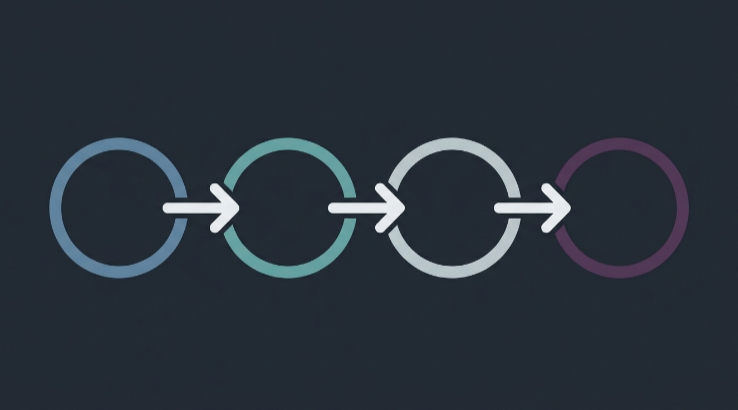
Ryker calls it the value chain:
Leads → Calls → Sales → Commissions
Every one of those arrows is a lever.
Pull the right ones and the math changes fast.
Lever 1: Close Rate
The biggest one.
And the most ignored.
Most reps, when they miss a sale, chalk it up to a bad lead.
They don’t sit down and actually dissect what happened.
Do the math on what you missed last month.
Multiply it by your commission per close.
That number?
That’s probably close to double what you made.
Lever 2: Show Rate
If you’re at 65% and you get to 80%, that’s roughly 3 extra calls per week.
12 per month.
3 extra sales per month.
There are five things that move show rate:
Channel. Where are you reaching out (text, email, call)?
Messaging. What are you actually saying?
Touch points. How many follow-ups before the call?
Timing. When are you sending them?
Automation. Once you know what works, systematize it.
And then there’s the one he saw work instantly across a whole team:
Speed to lead.
One rep on his team had a 90% show rate while everyone else was struggling.
Someone finally asked him what he was doing differently.
“I just call them as soon as they book.”
They rolled it out to the whole team.
Show rate shot up across the board.
Lever 3: Fill Rate
This one most reps completely ignore.
The top producers on Ryker’s teams (the ones doing 30K, even 60K in a single month) all had one thing in common.
They kept in touch with their closed clients.
While everyone else was fighting for new traffic,
they were getting upsells and referrals from people who already trusted them.
“Money moves at the speed of trust. The quickest path to cash is existing clients, because that’s where the most trust already lives.”
Two to three extra sales for every ten clients enrolled.
Over eight months, that adds up fast.
When to Change the Vehicle
I asked when reps should stop closing and start doing something else
(coaching, leadership, their own offer….)
His answer wasn’t a number.
It was a question:
Have you actually maxed this vehicle out?
Because most reps who say they have?
They haven’t.
They offer-hop.
They blame the offer for their plateau.
They call it fatigue.
But they never stopped to ask if they’d actually squeezed everything out of the opportunity they already had.
The man who keeps laying foundations but never builds the house.
And when you do genuinely max it out, the next thing reveals itself naturally.
Sales leadership. Your own offer. A team.
Just make sure, when that time comes, that you already have an audience.
Because without one, you can do it.
But it’s a grind, and the odds aren’t good.

Ryker runs Transformational Sales and works with reps at every stage, from landing their first role to doubling commissions in 60 days.
If you want to explore working with him, shoot him a message on Instagram or Facebook. It’s a discovery call, no pitch, just a conversation to see if he can actually help.